
How to Build a Sustainable Podcast Workflow That Fits Your Real Life
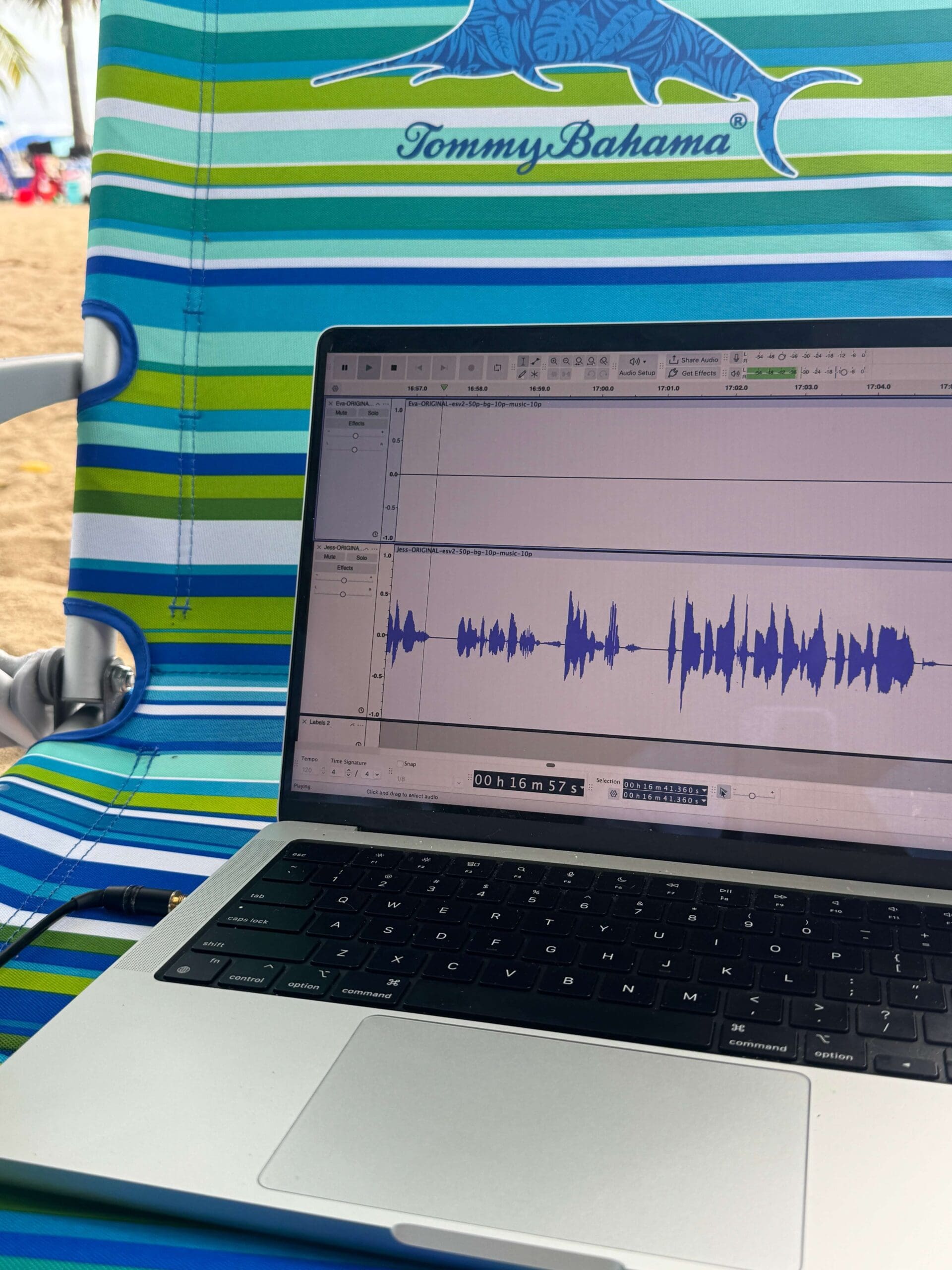
Here’s how to design a podcast workflow that fits your real life, not the idealized version of it! But first, a story…
I have what you might call a “type A” personality.
I plan the shit out of everything: my meals, my workouts, my dates with my husband, our budget, regular social gatherings with friends… you name it!
So when I discovered the world of fitness trackers, I immediately bought a Fitbit and got to tracking. I wore it 24/7 and measured EVERYTHING.
I became feverishly obsessed with hitting that 8,000-steps-a-day goal, to the point that if it was raining outside, I’d do “walking indoor workout” videos on YouTube that make you do different kinds of steps in place.
I’d have trouble falling asleep because I was worried about not having a good “sleep rating” in the morning, and I’d look at all the stats after a workout like I was studying for an exam.
Despite this seeming like a natural fit for my personality, I got so SICK of it so soon. I felt like a lab rat, like this little gadget was running my life. Maybe other people are capable of being chill about a fitness tracker, but not me.
So I put it in the deep recesses of my junk drawer and never looked at it again. Wearing that thing took up too much of my mental space and energy. It simply wasn’t sustainable for me.
When it comes to your podcast, you too might be setting impossible standards for yourself that make it unsustainable. So let’s talk about how to build a podcast workflow that makes sense for your real actual life and doesn’t send you on a first-class trip to Burnout City!!!
Everything that goes into a typical podcast workflow
Most people who start a podcast give up because they’re not fully aware of all the work that goes into podcasting. So before we build a sustainable workflow, I think it’s helpful to list out every single task involved in the process. It usually looks something like this:
- Planning episodes
- Optional: pitching, scheduling, and prepping for guests
- Recording episodes
- Editing episodes
- Writing your show notes and episode title
- Scheduling episodes in your hosting platform
- Promoting your episodes
You might be thinking right now, “This looks like a shitton of work that takes a shitton of time,” and you’re 100% right!
That’s why designing a realistic workflow is so important.
An example of a chaotic podcast workflow
Let’s look at an example of a chaotic and unrealistic workflow for a business owner with a podcast (which is most of my clients). Then we’ll fix it.
A weekly podcast with 45-minute episodes:
- Friday: Plan next week’s episode
- Monday: Record and edit the episode
- Tuesday: Write show notes + schedule
- Wednesday: Episode comes out
- Wednesday-Thursday: Promote episode
Repeat every week!
While at first glance, this podcast workflow might seem super organized, it’s actually a recipe for disaster because there’s no flexibility. If you fall behind a day or two (which you will), the work accumulates, there’s no rest in sight, and the episodes are getting produced right before they come out.
If podcasting is your main job, this might be fine. But for most business owners, that’s not the case.
7 ways to fix your podcast workflow
1. Make the podcast biweekly instead of weekly.
That way, you have one week to produce the episode and another to promote it and plan/record the next. You have a better chance of getting ahead, and your podcast doesn’t feel like it’s taking over every single day.
2. Shorten your episodes.
Maybe you lower that 45-minute episode duration to 20 minutes. That can cut your recording and editing time in half.
3. Batch record episodes.
Schedule an intensive day or week to record more than one episode, then do the rest of the workflow on a weekly basis. (Or batch other parts of the process too.)
4. Plan your podcast in seasons.
Take breaks in between to produce the next season. This works particularly well for business owners. Before you launch, you plan a whole season and do a lot of the production ahead of time. Then you release episodes weekly and focus on promoting them.
5. Outsource parts of the production.
Even just outsourcing your editing gives you a time and energy boost. You can outsource nearly everything that comes after recording.
6. Launch at least 3 weeks ahead.
This gives you a buffer in case anything goes wrong.
7. Pick one day a week to do everything podcast-related.
Maybe you’re the kind of person who likes doing everything in one go. If that’s your vibe, go for it.
The point is to design a workflow that feels right, one built around your real life, with room for the inevitable interruptions of daily life.
Why consistency is your #1 growth lever
Building a sustainable podcast workflow is necessary if you want to be consistent with your podcast. And trust me, you definitely do!
If you’ve never looked into it, go ahead and Google how many people give up on their podcasts. You’ll be shocked by the numbers.
“90% of podcasts don’t make it past 3 episodes.”
“1 in 3 podcasters have quit.”
“90% of existing podcasts are dead.”
This happens so frequently that there’s even a word for it: podfade! When a podcaster quits publishing episodes without officially ending the show.
So being consistent alone already puts you ahead of the vast majority of podcasters.
It’s true that consistency alone won’t make your podcast grow. You also have to focus on producing quality content that engages your audience. But without consistency, you probably won’t develop a loyal audience, and you won’t learn how to engage the one you have.
Consistency is the necessary foundation. Once you’ve got that, you can refine, improve, and tweak your way to growth.
How to be more consistent with your podcast
If you find yourself constantly skipping episodes, here’s what to do:
1. If you’re in crisis mode and feel overwhelmed, tell your listeners you’re going on break and when you’re coming back.
This might seem counterproductive, even scary, but you need the break for two reasons: to rest, AND to build the systems and workflow that will make consistency actually sustainable.
Yes, you might lose some listeners during the break. But losing the entire podcast because you’re burned out is a lot scarier. Taking time to set yourself up for future success is always worth it.
Tip: Record a short episode announcing you’re going on break, post an announcement on social media, and direct listeners to your most popular episodes in the meantime.
2. Once you’re on break, create a content buffer and refine your systems.
This is KEY, and without it, consistency might not be possible without burning out. Add ideas to your content calendar. Batch record episodes. Schedule and record interviews. Have a set number of batched episodes ready to publish, at least 3-4.
Even if you’ve hired someone to help with production, recording every single week isn’t realistic forever. There will be a week you’re too busy, sick, or tired. A content buffer lets you stay consistent when you don’t have the capacity for it.
3. Take a hard look at what’s not working, and change it.
45-minute episodes take a long time to produce, so what if you could accomplish the same with 15-minute episodes?
Scheduling guests also takes time, so what if you switched to mostly solo?
Weekly episodes can be overwhelming, so why not biweekly?
There are so many tweaks you can make to your podcast to make it sustainable for your real life, instead of this impossible ideal hovering over you.
Client spotlight: Gemma from This Social Cottage
Consistency doesn’t have to look like the typical weekly 45-minute episode with guests for a podcast to succeed.
It can look like my client Gemma, from the podcast This Social Cottage. Gemma started her podcast in May 2025, and it’s currently a top 3% global podcast.
Her average episode length is thirteen minutes.
She publishes weekly, and often batches 2-3 episodes so she can skip some weeks. Most of her episodes are solo, and she occasionally brings in guests. In each episode, she shares one quick Instagram tip and promotes one of her offers. And she outsources the editing to me, which, since her episodes are so short, keeps the cost very low!
Gemma is a busy business owner and mom who made podcasting work for her. Her podcast is valuable to her audience, easy to consume, and an excellent lead generator for her business.
Gemma’s podcast has grown because she produces quality content consistently, but the reason she’s able to do that is that she designed a sustainable podcast workflow.
If you want a podcast that drives people to your business but you’re worried about making it sustainable…
Join Saturday Morning Launch Plan (or hop on the waitlist for the next round if enrollment’s closed). I’ll teach you exactly how to launch a podcast from Step 1 all the way to launch day, with sustainability in mind from the start.
Want more podcasting tips like this? Subscribe to Sounds Like Brunch, my weekly newsletter for current and aspiring podcasters.
Thanks for reading! 🥂
YOUR NEXT READ ↴
I’ll guide you through every single step of bringing your podcast to the table. From crafting a unique concept to creating a hype-generating launch plan, you’ll never feel lost or stuck along the way.
Once your podcast is up and running, I’ll handle all the tasks you dread, so you can reclaim your time and keep your podcast the most joyful and effortless part of your marketing strategy.
Let’s sit down for a coffee and get to know each other.
MEET YOUR FAIRY PODMOTHER
Hi, I’m Adrienne Cruz—Podcast Manager, Launch Strategist, & Creative Collaborator

Step one is creating a super-specific and unique podcast concept.
Grab my freebie "The Podcast Starter" to launch a podcast that stands out from the start!
Want to start a podcast but have no idea where to BEGIN?

